
Political parties
01.2
Parties turn ideas into power.
They recruit leaders, persuade voters, and form governments. Their decisions shape individual freedom, economic opportunity, and relations between nations.
The Republican International Secretariat connects conservative party leaders and campaign practitioners across borders. Through reciprocal exchange, training, and research, RIS will support established parties, learn from their experience, and help emerging parties build durable organizations.

01.3 · WHAT WE BELIEVE
The principles we carry forward.
RIS exists to preserve, renew, and advance the conservative tradition: individual liberty, free enterprise, democratic self-government, strong civil society, religious liberty, and cooperation among free nations.
These principles give people the freedom to build businesses, form associations, practice their faith, and choose their government. Strong parties and civic institutions help each generation defend and advance them.
Our inheritance and its future ↓

White House photograph · Public domain
01.4 · OUR INHERITANCE
Freedom needs another generation.
Conservatives helped win the Cold War by advancing a political and economic vision grounded in liberty, enterprise, and democratic government. That inheritance must be maintained and passed to new leaders.
Conservative parties around the world carry this tradition forward. RIS will support established parties and learn from their experience, while helping emerging parties develop leaders, campaign skills, and durable organizations. International exchange connects that work, strengthening the tradition where it is established and helping it take root where it is still developing.
Cold War vision: Ronald Reagan’s Westminster address, 1982.

02 · THE PROBLEM
The left organizes across borders.
The left organizes and invests internationally to advance its vision of global transformation. The Socialist International, Progressive Alliance, and Party of European Socialists connect democratic parties and leaders across borders. The Chinese Communist Party runs an additional international network of political parties and organizations, using exchanges, leadership training, and sustained relationships to expand its influence.
132parties and organizations in the Socialist International; it reports 34 member parties in government
400+parties and organizations in regular CPC contact, as reported in 2017
~160countries and regions in that 2017 CPC account
Sources: Socialist International; CPC statement, 2017.
Swipe down for more ↓
THE PROBLEM · 02.1
American and European leaders are working together.
In April 2026, American and European progressive leaders gathered in Barcelona for the Global Progressive Mobilisation. Minnesota Governor Tim Walz and U.S. Senator Chris Murphy of Connecticut participated alongside Spain’s Prime Minister Pedro Sánchez and Magdalena Andersson, leader of Sweden’s Social Democratic Party and former prime minister. U.S. Senator Bernie Sanders of Vermont and New York City Mayor Zohran Mamdani contributed video messages.
The gathering connected the Socialist International, Progressive Alliance, and Party of European Socialists around a shared international agenda. Their cooperation extends beyond national elections through continuing political relationships and exchange.
Sources: Party of European Socialists · April 20, 2026; Global Progressive Mobilisation · April 17–18, 2026.


THE PROBLEM · 02.2
China invests in political exchange.
In 2017, the Chinese Communist Party reported regular contact with more than 400 parties and organizations in about 160 countries and regions. Its leader proposed inviting 15,000 foreign party members for exchanges over five years.
Leadership seminars and training courses turn those relationships into repeated contact between political practitioners.
120 officials · 6 parties
These 120 officials represented six Southern African parties at a leadership seminar at the Mwalimu Julius Nyerere Leadership School in Tanzania, organized with support from the Chinese Communist Party.
Seminar report ↗22 participants · 18 countries
These 22 political-party spokespersons and media officials from 18 countries visited China for a training course and met with the Communist Party’s International Department in Beijing.
Course report ↗Network figures and exchange proposal: Chinese government account, 2017. Seminar and course figures are reported by the CPC’s International Department.
THE PROBLEM · 02.3
Freedom’s loss has a human cost.
Nearly two million people died under Cambodia’s Khmer Rouge between 1975 and 1979 through forced labor, persecution, starvation, and execution. This photograph documents victims of that communist regime.
The Khmer Rouge did not operate alone. Communist China supplied weapons, economic assistance, and advisers to its regime. That support continued even after the Khmer Rouge lost power in 1979. Cambodia shows how international alliances can sustain authoritarian movements—and why the relationships political parties build deserve serious attention.
Historical account: United States Holocaust Memorial Museum. Chinese support: 1978 U.S. assessment · After 1979. Photograph: Oliver Spalt, Choeung Ek, 2002, CC BY-SA 2.5.


03 · WHAT RIS DOES
Put shared principles into practice.
RIS will bring conservative political practitioners together through Campaign Exchange, leadership development, research, and continuing international relationships. Established parties bring experience to share; emerging parties bring new approaches and opportunities to learn.
Campaign visits can become lasting professional relationships. Training can carry practical knowledge to new leaders. Our aim is cooperation that continues between elections.
Ask about campaign exchanges, training, or introductions for your party or organization.
Swipe down for more ↓

03.1
Campaign Exchange
Campaign experience becomes more valuable when practitioners can learn from one another across borders. Reciprocal educational visits will let international participants observe American political organization and American practitioners study methods abroad. Professional development and continuing relationships are central to the exchange.

03.2
State Leaders Program
International relationships affect the work of American states and communities. The State Leaders Transatlantic Education Program will examine those connections through briefings and exchanges on trade and investment, energy, agriculture, technology, supply chains, and democratic institutions.
03.3
International Network
Shared principles create common ground. Lasting relationships make cooperation possible. RIS will connect practitioners across the Americas, Europe, Africa, and Asia. The European People’s Party, European Conservatives and Reformists, and other center-right organizations draw on different national traditions. Partners retain their identities and priorities while learning from one another.

03.4
Research & Briefings
Good political judgment draws on ideas and experience. RIS will publish briefings on political organizations, democratic practice, and the conservative tradition, connecting intellectual foundations with lessons from elections and educational exchanges.

04 · REGIONS
Shared principles. Different political settings.
Parties work within distinct national traditions, electoral systems, and governing challenges. These briefings examine where the right is gaining ground, where it is losing influence, and the choices shaping each region.
RIS’s first relationships are focused on Europe; its purpose is global. Regional understanding helps practitioners identify useful opportunities for exchange and learn from one another’s experience.
Swipe down for regional briefings ↓
04 · REGIONAL BRIEFING
The Americas
Updated October 6, 2026
United States · Canada · Argentina · Chile · Colombia · Brazil
The right is advancing across much of the Americas. Brazil is the next major test.
What is happening here?
Conservative and populist-right forces have won consequential elections in the United States, Argentina, Chile, and Colombia. Abelardo de la Espriella defeated Iván Cepeda in Colombia’s June 2026 presidential runoff; Cepeda conceded after the close count. Defensores de la Patria, the movement behind de la Espriella’s candidacy, has rallied support around conservative ideas without being a formal political party.
Brazil votes again on October 25. In the October 4 first round, Flávio Bolsonaro of the Liberal Party (PL) received 47.03% of valid votes, ahead of President Luiz Inácio Lula da Silva of the Workers’ Party (PT) at 45.16%. Neither reached the majority required to win the presidency.
Canadian Conservatives gained seats in 2025 but remained in opposition. Economic priorities also divide the region’s right: US Republicans favor tariffs and domestic production, while Argentina’s La Libertad Avanza pursues smaller government and market reform. Public security is prominent in Chilean Republican politics.
Colombia · AP, June 24, 2026 ↗ · Brazil · official TSE count ↗ · Brazil · runoff date ↗
What to watch
Brazil’s October 25 runoff, Colombia’s transition from electoral victory to governing delivery, and whether recent winners sustain their coalitions.
The principal political currents
Established conservative parties
Canada’s Conservative Party, Argentina’s PRO, and Chile’s UDI and National Renewal represent established party organizations. Their relationships with newer movements differ by country.
International Democracy Union membership ↗Populist and national-conservative right
The US Republican Party, Chile’s Republicans, and Brazil’s PL combine conservative agendas with distinct leadership and national political identities.
Colombia election reporting ↗Libertarian reform
Argentina’s La Libertad Avanza emphasizes smaller government, private enterprise, and market reform.
Argentina election and reform agenda ↗Agendas shaping the competition
- Affordability and growthCanadian Conservatives emphasize housing, tax reductions, and resource development.
- Different economic modelsThe US Republican platform favors tariffs and domestic production; Milei’s agenda emphasizes smaller government and labor, pension, and tax reform.
- Public orderChile’s Republicans emphasize restoring law and order; immigration and border enforcement also feature prominently in the US platform.
- Brazil’s governing choiceThe runoff pits the PL challenger against the incumbent PT president. Flávio Bolsonaro has proposed fewer ministries; public security and the size of government are central points of contrast.
Why this matters for RIS · assessment
Recent electoral gains create opportunities for exchanges on party organization, local leadership, and coalition management. Participants can compare how campaigns recruit candidates and sustain their organizations after victory.
Consequential elections
| ColombiaJune 2026 presidential runoff | Conservative victory Abelardo de la Espriella defeated Iván Cepeda, who conceded on June 24 after the closely contested runoff. Associated Press ↗ |
|---|---|
| BrazilOctober 4, 2026 · first round | Runoff pending · October 25 Flávio Bolsonaro (PL): 47.03%. Lula (PT): 45.16%. Neither secured the majority needed for a first-round presidential victory. Superior Electoral Court (TSE) ↗ |
| United States2024 presidential | Victory Donald Trump won 312 electoral votes to Kamala Harris’s 226. Federal Election Commission ↗ |
| Canada2025 federal | Seats up, office lost Conservatives won 144 seats; Liberals won 169. Elections Canada ↗ |
| Argentina2025 legislative | Advance La Libertad Avanza received 40.68% in the reported national tally, strengthening Milei’s negotiating position in Congress. Reuters · reported official results ↗ |
| Chile2025 presidential | Victory José Antonio Kast defeated Jeannette Jara in the runoff and assumed the presidency in March 2026. Government of Chile ↗ |
Parties and movements to follow
The watchlist below includes eight parties and Colombia’s Defensores de la Patria movement.
| Country | Party / movement | Analytical category |
|---|---|---|
| Canada | Conservative Party | Center-right |
| Argentina | Republican Proposal (PRO) | Center-right |
| Chile | Independent Democratic Union (UDI) | Center-right |
| Chile | National Renewal (RN) | Center-right |
| United States | Republican Party | Populist-led right |
| Argentina | La Libertad Avanza | Libertarian / populist right |
| Chile | Republican Party | Nationalist / populist right |
| Brazil | Liberal Party (PL) | Populist-led right |
| Colombia | Defensores de la Patria | Candidate movement / context |
Defensores de la Patria is the movement behind Abelardo de la Espriella’s presidential candidacy.
Sources & scope
Selected country developments, election results, and published party priorities. Links below provide further reading.
- Party affiliations: International Democracy Union ↗
- Canadian Conservative platform ↗
- US Republican platform ↗
- Chilean Republican election statement ↗
- Brazil’s candidates and proposals · Agência Brasil ↗
Election results are dated to the contest shown. Party priorities summarize published platforms.

04 · REGIONAL BRIEFING · INITIAL FOCUS
Europe
Updated October 6, 2026
EU institutions · Germany · Austria · France · Italy · Poland · Hungary
The European right has greater influence, but several competing centers of power.
What is happening here?
The 2024 European election strengthened the mainstream center-right and parties further to its right. The European People’s Party (EPP) remains pivotal in the European Parliament, forming frequent majorities with the Socialists and Democrats and Renew Europe while also cooperating with conservative and nationalist groups on particular measures.
The European Conservatives and Reformists (ECR), including Italy’s Brothers of Italy and Poland’s Law and Justice, forms a separate national-conservative group. Patriots for Europe and Europe of Sovereign Nations organize other parties on the right. Their cooperation varies with policy, national interests, and positions on European integration and foreign affairs.
Germany’s Christian Democratic Union and Christian Social Union lead a coalition with the Social Democrats, under pressure after 2026 regional setbacks. Austria’s Freedom Party won first place in 2024 but remains outside the conservative-led government. In Hungary, Péter Magyar’s center-right Tisza defeated Viktor Orbán’s Fidesz in April 2026, shifting power between competing parties on the right.
EU coalition dynamics · July 2026 assessment ↗ · ECR membership ↗ · Germany · September 2026 coalition pressure ↗ · Austria · October 4, 2026 ↗ · Hungary · April 2026 result ↗
What to watch
How the EPP balances centrist and right-leaning legislative partners; ECR’s role in that bargaining; France’s 2027 presidential contest; and the consequences of Hungary’s change of government.
Four groups in the European Parliament
European People’s Party · EPP
The mainstream Christian-democratic and center-right group. Examples include Germany’s CDU/CSU, Austria’s ÖVP, Italy’s Forza Italia, and Hungary’s Tisza. Its priorities include competitiveness, security, and border protection.
EPP Group membership ↗European Conservatives and Reformists · ECR
A separate national-conservative group including Brothers of Italy, Law and Justice, and the Sweden Democrats. Priorities include member-state sovereignty, lighter regulation, migration control, and stronger NATO cooperation.
ECR published priorities ↗Patriots for Europe · PfE
A sovereigntist group including France’s National Rally, Hungary’s Fidesz, Italy’s Lega, and Austria’s FPÖ. It emphasizes national decision-making and border control. It is organizationally separate from ECR.
Patriots national delegations ↗Europe of Sovereign Nations · ESN
A separate group centered on Germany’s AfD and other parties opposing deeper EU centralization. Its existence illustrates fragmentation on the right even among parties emphasizing sovereignty.
ESN group principles ↗Agendas shaping the competition
- Growth, energy, and regulationEPP and ECR both emphasize competitiveness. ECR also prioritizes lighter regulatory burdens and energy resilience, offering areas for cooperation despite differing views of EU integration.
- Migration and sovereigntyBorder enforcement is a point of overlap; disputes concern how much authority belongs at EU level and how national interests should be protected.
- Defense and transatlantic relationsECR explicitly supports NATO and stronger defense capabilities. Foreign-policy positions should be assessed party by party rather than inferred from a shared conservative label.
Why this matters for RIS · assessment
European party networks provide channels for exchanges among campaign staff and local leaders. Coalition-building, candidate development, and transatlantic cooperation offer concrete subjects for joint programs.
Consequential elections
| HungaryApril 2026 parliamentary | Center-right challenger wins Péter Magyar’s Tisza defeated Viktor Orbán’s Fidesz, ending 16 years of Orbán government. Tisza belongs to the EPP parliamentary group. Reuters ↗ |
|---|---|
| PolandJune 2025 presidential | Conservative presidency Law and Justice-backed Karol Nawrocki won 50.89%. A presidential victory is distinct from winning control of the parliamentary government. Polish Press Agency · official result ↗ |
| Germany2025 federal | Advance CDU and CSU won 208 seats combined. AfD won 152, an increase of 69 over 2021. Federal Returning Officer ↗ |
| Austria2024 parliamentary | First place FPÖ received 28.8% and 57 seats; ÖVP received 26.3% and 51 seats. Austrian Interior Ministry ↗ |
| France2024 legislative | Gains, no majority RN won 125 seats, up from 89 in 2022. RN and its ally held 143, below the 289-seat majority threshold. Inter-Parliamentary Union ↗ |
| Italy2024 European Parliament | Parties to follow |
Parties and movements to follow
The watchlist below covers 13 national parties across the countries discussed in this briefing.
| Country | Party / movement | Analytical category |
|---|---|---|
| Germany | Christian Democratic Union (CDU) | Center-right |
| Germany | Christian Social Union (CSU) | Center-right |
| Austria | Austrian People’s Party (ÖVP) | Center-right |
| France | Les Républicains | Center-right |
| Italy | Forza Italia | Center-right |
| Germany | Alternative for Germany (AfD) | Nationalist / populist right |
| Austria | Freedom Party (FPÖ) | Nationalist / populist right |
| France | National Rally (RN) | Nationalist / populist right |
| Italy | Brothers of Italy (FdI) | National conservative |
| Italy | Lega | Nationalist / populist right |
| Poland | Law and Justice (PiS) | National conservative |
| Hungary | Tisza | Center-right |
| Hungary | Fidesz | National conservative |
National parties are listed with their political orientation; the European Parliament groups are described above.
Sources & scope
Selected country developments, election results, and published party priorities. Links below provide further reading.
- Center-right affiliations: European People’s Party ↗
- Conservative affiliations: International Democracy Union ↗
- EPP priorities for 2026 ↗
- Patriots for Europe priorities ↗
- ECR membership ↗
- ECR priorities ↗
- EPP Group membership, including Tisza ↗
- Patriots delegations ↗
- ESN principles ↗
- France’s 2027 contest · October 2026 interview ↗
Election results are dated to the contest shown. Party priorities summarize published platforms.
04 · REGIONAL BRIEFING
Africa
Updated October 6, 2026
Ghana · Kenya · Botswana
Ghana and Botswana are rebuilding after electoral defeat.
What is happening here?
Ghana’s New Patriotic Party lost the presidency and parliamentary contest in 2024. In Botswana, the Democratic Party fell from 38 elected seats to four, ending 58 years in power. Both parties now face the task of rebuilding support in opposition.
In Kenya, William Ruto won the 2022 presidential election with 50.49% of the vote. His governing alliance’s economic program emphasized small businesses and agriculture.
Ghana · 2024 concession ↗ · Botswana · parliamentary result ↗
What to watch
The NPP and BDP’s recovery in opposition.
Where the political openings are
Ghana and Botswana · opposition recovery
The New Patriotic Party and Botswana Democratic Party retain established organizations after their 2024 defeats. Both face the task of rebuilding support in opposition.
Botswana election record ↗Agendas shaping the competition
- Taxation and economic growthGhana’s NPP campaigned on tax simplification, business growth, and digital administration. Its 2024 defeat puts its ability to regain public support back in focus.
- Small businesses and agricultureKenya’s governing alliance’s 2022 economic program emphasized small businesses and agriculture.
Why this matters for RIS · assessment
Potential exchanges with Ghanaian and Botswanan counterparts could focus on party renewal, candidate development, and rebuilding after electoral defeat.
Consequential elections
| Ghana2024 presidential | Defeat NPP candidate Mahamudu Bawumia conceded to John Mahama after the party lost the presidential and parliamentary contests. Bawumia’s concession speech ↗ |
|---|---|
| Kenya2022 presidential benchmark | Victory William Ruto won with 50.49%. Independent Electoral and Boundaries Commission ↗ |
| Botswana2024 parliamentary | Parties to follow |
Parties and movements to follow
The watchlist below covers Ghana’s NPP, Botswana’s BDP, and Kenya’s UDA.
| Country | Party / movement | Analytical category |
|---|---|---|
| Ghana | New Patriotic Party (NPP) | Center-right |
| Botswana | Botswana Democratic Party (BDP) | Liberal-conservative |
| Kenya | United Democratic Alliance (UDA) | Mixed / context entry |
Ghana and Botswana offer examples of established parties rebuilding in opposition; Kenya offers a governing coalition to follow.
Sources & scope
Selected country developments, election results, and published party priorities. Links below provide further reading.
- Conservative affiliations: International Democracy Union ↗
- NPP manifesto launch ↗
- Kenya Kwanza 2022 manifesto · document mirror ↗
- Botswana party classification: BTI 2026 ↗
Election results are dated to the contest shown. Party priorities summarize published platforms.
04 · REGIONAL BRIEFING
Asia
Updated October 6, 2026
East Asia · South Asia · Southeast Asia · selected country developments
Nepal’s Gen Z breakthrough joins conservative gains in Japan and Thailand.
What is happening here?
Nepal’s Gen Z uprising displaced the old political leadership. Youth-led protests against corruption and a social media ban forced Prime Minister K. P. Sharma Oli to resign in September 2025. The March 2026 election gave the Rastriya Swatantra Party (RSP) 182 of 275 parliamentary seats, bringing former Kathmandu mayor Balen Shah to the premiership.
The new government promises to fight corruption, expand economic opportunity, and reform institutions. At its June convention, the RSP adopted social democracy alongside a competitive liberal economy. Flood recovery now tests the government’s ability to deliver.
Japan’s Liberal Democratic Party (LDP) won a commanding lower-house majority in February 2026. Thailand’s conservative Bhumjaithai won first place in its snap election, while South Korea’s People Power Party lost the presidency in 2025. India’s Bharatiya Janata Party (BJP) retained government through its alliance after losing its own majority in 2024. Taiwan’s Kuomintang (KMT) gained a legislative plurality without a majority.
Conservative and market-oriented organizations also include Nepal’s Rastriya Prajatantra Party, Sri Lanka’s United National Party, and Mongolia’s Democratic Party. In Southeast Asia, Malaysia’s United Malays National Organisation (UMNO) remains a major political force, while Indonesia’s Gerindra is the party of President Prabowo Subianto.
Nepal · uprising and electoral change ↗ · Nepal · RSP’s June policy declaration ↗ · Nepal · governing test, September 2026 ↗ · Thailand · 2026 conservative gain ↗ · Additional party networks ↗
What to watch
Nepal’s delivery on jobs and anti-corruption alongside flood recovery; Japan and Thailand’s use of their electoral gains; South Korean conservative renewal; and coalition bargaining in India and Southeast Asia.
Political forces across the subregions
Nepal · Gen Z and a new governing force
Nepal’s RSP won a large mandate after the Gen Z protests. It combines an enterprise-friendly economic agenda with a declared social-democratic philosophy. The Rastriya Prajatantra Party represents a separate conservative and monarchist tradition.
RSP political report · June 2026 ↗East Asia · established conservatives
Japan’s LDP and Ishin, South Korea’s People Power Party, and Taiwan’s KMT represent established conservative organizations. Japan’s Sanseito adds a nationalist and populist strand.
Japan’s 2026 election report ↗South Asia · several political traditions
India’s BJP is a major national-conservative organization. Sri Lanka’s UNP and Nepal’s RPP illustrate other market-oriented and conservative traditions, with different views on institutions and national identity.
UNP and RPP · international party affiliations ↗Southeast Asia · major parties and coalitions
Thailand’s Bhumjaithai won first place in the 2026 election. Malaysia’s UMNO remains a major Malay political organization, and Indonesia’s Gerindra is the party of President Prabowo Subianto.
Thailand’s conservative consolidation ↗Agendas shaping the competition
- Nepal’s generational reform agendaAnti-corruption, employment, investment, and more effective government underpin the new mandate. The RSP combines an enterprise-friendly economy with welfare commitments.
- Security and economic resilienceJapan’s conservatives emphasize national security and growth. India’s BJP combines manufacturing and infrastructure with welfare and national identity.
- Coalitions and local organizationThailand’s conservative advance, India’s alliance government, and Southeast Asian party competition make coalition relationships and local organization central to the regional picture.
Why this matters for RIS · assessment
Nepal’s political transition offers lessons in youth recruitment, new-party organization, and candidate development. Exchanges across Asia can compare those methods with the local networks and coalition practices of established parties.
Consequential elections
| NepalMarch 5, 2026 parliamentary | Gen Z-era electoral breakthrough RSP won 182 of 275 lower-house seats in the election following the September 2025 uprising. Balen Shah became prime minister with a large reform mandate. Carnegie · election analysis ↗ |
|---|---|
| ThailandFebruary 2026 parliamentary | Conservative advance Anutin Charnvirakul’s Bhumjaithai won first place in the snap election and pursued coalition government. The Diplomat ↗ |
| Japan2026 lower house | Victory LDP won 316 of 465 seats. Its coalition partner, Japan Innovation Party, won 36; the two held 352 combined. LDP election report · party source ↗ |
| South Korea2025 presidential | Defeat People Power Party candidate Kim Moon-soo lost to Democratic Party candidate Lee Jae-myung. Election.org · reproduced NEC count ↗ |
| India2024 parliamentary | Majority lost, coalition retained BJP won 240 seats, down from 303 in 2019. Its alliance retained a majority, allowing Modi to begin a third term. Inter-Parliamentary Union ↗ |
| Taiwan2024 legislative | Plurality gained KMT won 52 of 113 seats, ahead of DPP’s 51, but fell short of a parliamentary majority. Central Election Commission ↗ |
Party references across Asia · illustrative
Selected conservative and market-oriented parties, together with Nepal’s new governing party.
| Country | Party / movement | Analytical category |
|---|---|---|
| Japan | Liberal Democratic Party (LDP) | Conservative / center-right |
| Japan | Japan Innovation Party (Ishin) | Market-oriented / conservative |
| South Korea | People Power Party (PPP) | Center-right |
| Taiwan | Kuomintang (KMT) | Conservative / center-right |
| India | Bharatiya Janata Party (BJP) | National conservative |
| Japan | Sanseito | Nationalist / populist right |
| Nepal | Rastriya Prajatantra Party (RPP) | Conservative / monarchist |
| Sri Lanka | United National Party (UNP) | Market-liberal / center-right |
| Mongolia | Democratic Party | Market-liberal / center-right |
| Thailand | Bhumjaithai | Conservative / populist right |
| Nepal | Rastriya Swatantra Party (RSP) | Reformist / social-democratic context |
Nepal’s RSP is included to explain the country’s political transition. Its declared philosophy is social democracy; the conservative RPP is a separate party.
Sources & scope
Selected country developments, election results, and published party priorities. Links below provide further reading.
- PPP and KMT affiliations: International Democracy Union ↗
- LDP policy priorities ↗
- BJP 2024 manifesto · document mirror ↗
- Sanseito’s policy and identity statement ↗
- Korean election count: NEC source files ↗
- Taiwan election context: Council on Foreign Relations ↗
- Nepal · Gen Z and March election ↗
- Nepal · June convention and economic policy ↗
- Nepal · full RSP political report ↗
- Nepal · flood recovery tests government ↗
- Thailand · 2026 election ↗
- Malaysia · UMNO and coalition tensions, September 2026 ↗
- Indonesia · Prabowo’s government, October 2026 ↗
Election results are dated to the contest shown. Party priorities summarize published platforms.
05 · PEOPLE
Board Members
- Rich Holt
- Claude Wheeler
- Tanveer Patel
- Shalira Taylor
- Matt Frohlich
- Rashmee Sharif
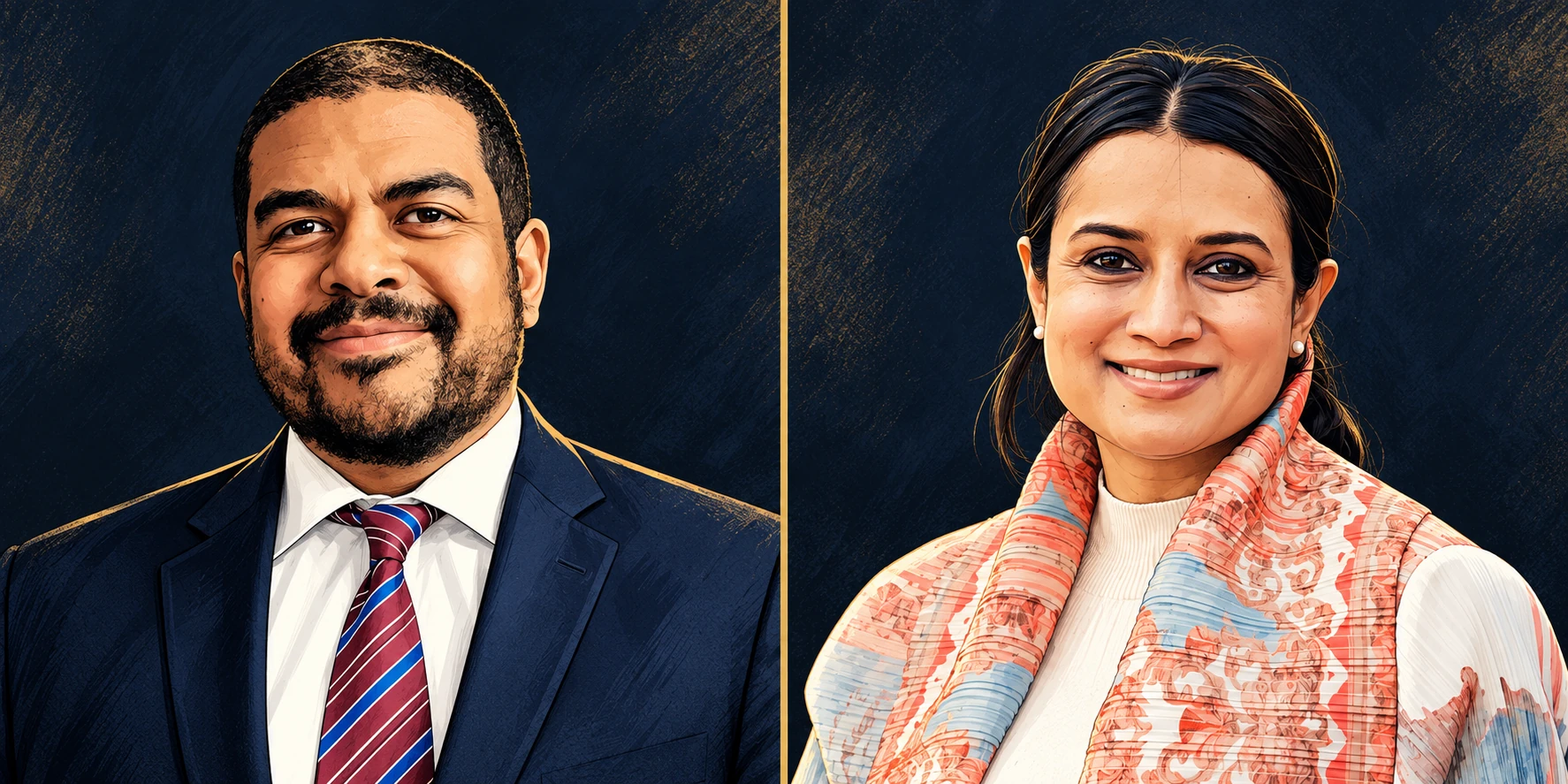
Rich Holt
Rich Holt is a Republican political strategist and European elections analyst with more than two decades of experience in campaigns, party organization, coalition building, and public affairs. Through Sirius Campaigns, he advises domestic and international clients on political strategy, communications, and organizational development.
Read full biography
He previously served as Political Director of the Alabama Republican Party and the Virginia House Republican Campaign Committee, and as State Field Director of the Washington State Republican Party. His experience spans presidential, congressional, and legislative campaigns, including building statewide field organizations, training campaign staff, and developing coalitions across business, faith, veterans, and minority communities.
Rich’s international work includes engagement with the European People’s Party, European Conservatives and Reformists, and European political foundations. He has participated in International Democrat Union campaign managers’ meetings and served as a panelist at the Transatlantic Think Tank Conference. As a European elections analyst and Project 21 contributor at the National Center for Public Policy Research, he writes on elections, political institutions, and international affairs. His commentary has appeared in RealClearPolitics, InsideSources, The Daily Caller, and the Washington Examiner.
Rich served eight years in the Ohio Army National Guard and holds a Bachelor of Arts in History from Ohio University. He speaks Russian at professional working proficiency and German at working proficiency.
↓ More board members
05 · PEOPLE
Board Members

Claude Jeffery Wheeler Jr.
Claude Jeffery Wheeler Jr. is a political strategist, field operations leader, and organizational professional with extensive experience in political campaigns, grassroots organizing, and leadership development.
Read full biography
Throughout his career, Claude has held leadership positions at the state and national levels, working with political organizations, campaigns, and grassroots movements across the United States. His experience includes managing large field teams, developing voter-contact operations, coordinating volunteers, training campaign staff, and implementing strategic outreach programs.
Claude has also served in leadership roles within the South Carolina Republican Party and Young Republicans, as well as working on congressional and presidential-level campaigns. His background in organizational management extends beyond politics, including several years as a Call Center Manager with Bank of America, where he led large teams and managed complex operations.
He brings a combination of grassroots experience, organizational leadership, campaign strategy, and relationship-building to his international role, with a focus on expanding political cooperation and developing strong networks throughout the region.
↓ More board members
05 · PEOPLE
Board Members

Tanveer Patel
Lorem ipsum dolor sit amet, consectetur adipiscing elit. Integer vitae sapien non lorem tincidunt volutpat. Donec vel enim quis neque dignissim facilisis.
Sed ut perspiciatis unde omnis iste natus error sit voluptatem accusantium doloremque laudantium. Ut enim ad minima veniam, quis nostrum exercitationem ullam corporis suscipit laboriosam.
↓ More board members
05 · PEOPLE
Board Members

Shalira Taylor
Lorem ipsum dolor sit amet, consectetur adipiscing elit. Integer vitae sapien non lorem tincidunt volutpat. Donec vel enim quis neque dignissim facilisis.
Sed ut perspiciatis unde omnis iste natus error sit voluptatem accusantium doloremque laudantium. Ut enim ad minima veniam, quis nostrum exercitationem ullam corporis suscipit laboriosam.
↓ More board members
05 · PEOPLE
Board Members

Matt Frohlich
Lorem ipsum dolor sit amet, consectetur adipiscing elit. Integer vitae sapien non lorem tincidunt volutpat. Donec vel enim quis neque dignissim facilisis.
Sed ut perspiciatis unde omnis iste natus error sit voluptatem accusantium doloremque laudantium. Ut enim ad minima veniam, quis nostrum exercitationem ullam corporis suscipit laboriosam.
↓ More board members
05 · PEOPLE
Board Members
Rashmee Sharif
Chief Operating Officer, SignalVote
Rashmee Sharif is an executive, entrepreneur, and civic leader with extensive experience in strategic operations, project management, and political engagement. She currently serves as Co-Founder and Chief Operating Officer of SignalVote, a political technology company focused on modernizing campaign operations, fundraising, and compliance.
Read full biography
Prior to her entrepreneurial ventures, Rashmee spent more than a decade at Cigna, where she served as a Senior Project Manager leading complex initiatives and cross-functional teams. Her professional background also includes teaching Global Studies at The University of Alabama, where she helped students explore international development, political systems, and global economic issues.
A Rotary Ambassadorial Scholar, Rashmee lived and studied in Buenos Aires, Argentina, from 2006 to 2008, an experience that deepened her commitment to international understanding and cross-cultural engagement. She has remained active in public affairs, grassroots political organizing, candidate engagement, and efforts to strengthen civic participation. Her political experience includes managing a municipal campaign and facilitating dialogue between community leaders, elected officials, and political organizations.
Rashmee is a longtime member of The University of Alabama's Community Affairs Board of Advisors, a Blackburn Institute Fellow, and a graduate of the FBI Citizens Academy. Her community leadership also includes service with the Junior League of Birmingham and initiatives promoting civic education and engagement.
She holds a Bachelor of Science and a Master of Business Administration from The University of Alabama. A lifelong Alabamian, Rashmee resides in the Birmingham area with her husband and their two sons.
06 · FROM THE SECRETARIAT
Follow the work of the Secretariat.
Briefings, announcements, and updates on RIS’s educational exchanges and international relationships.
Loading the latest posts…

07 · JOIN THE NETWORK
Keep the conversation going.
Follow RIS for briefings, exchange announcements, and opportunities to take part. The Updates page brings our latest Substack posts onto this site.
Read the latest updates →07.1 · CONTACT US
Start a conversation.
Tell us about your party or organization and the help you are seeking: campaign exchange, training, research, or introductions. Select your country to reach the appropriate RIS contact.
07.2 · TAKE ACTION
Join the effort.
Bring your experience to an international exchange. Tell us how you would like to contribute, and we’ll connect you with the RIS contact for your country.
For briefings and announcements, read RIS updates →.